Looking Back Before Moving Forward
Business Growth Journey
Stage 1 | Build a Strong Foundation
Week 12
Looking Back Before Moving Forward
Before you focus on what’s next, take a moment to recognize how far you’ve already come.
Business owners rarely pause.
There’s always another idea.
Another project.
Another opportunity.
Another challenge waiting just around the corner.
We become so focused on building what’s next that we sometimes forget to appreciate what we’ve already built.
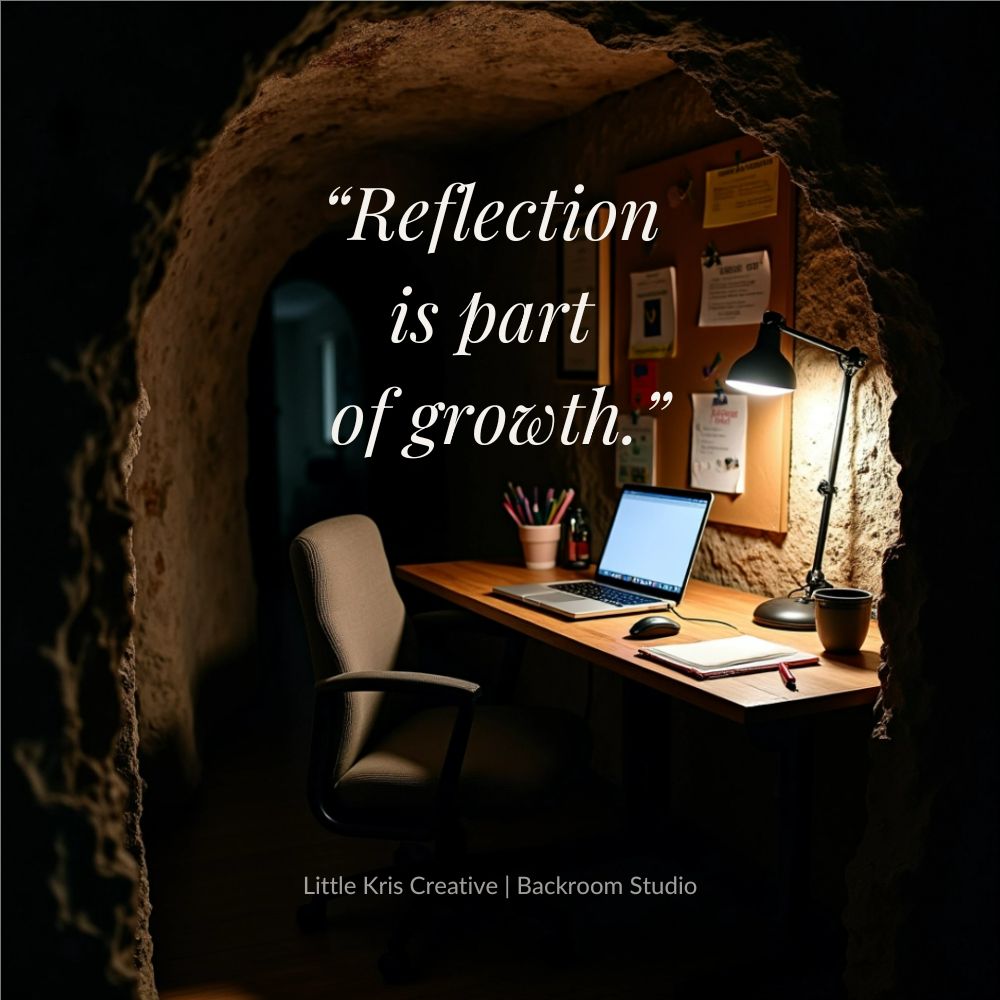
But reflection isn’t a distraction from growth.
It’s part of growth.
Sometimes the clearest path forward begins by looking back.
Progress Is Easy to Miss
When you’re living your business every day, change often feels invisible.
The small improvements blend together.
You forget how difficult certain decisions once felt.
You stop noticing the habits you’ve developed.
The systems you’ve created become routine.
What once required tremendous effort now feels normal.
That’s growth.
Not because the work became easier.
Because you’ve become more capable.
Think About Where You Started
Twelve weeks ago, we began by talking about overwhelm.
Competing priorities.
Mental clutter.
The feeling that everything seemed equally important.
Since then, we’ve explored what happens when you stop trying to solve everything at once.
You’ve looked at the difference between being busy and making meaningful progress.
You’ve considered how one important decision can change what happens next.
You’ve looked at unfinished decisions and the attention they consume.
You’ve seen how small wins create momentum.
You’ve considered what might need to be simplified instead of expanded.
And you’ve looked at how confidence grows through experience.
None of those things creates a finished business.
That was never the goal.
They create a stronger foundation.
Your Business May Not Look Dramatically Different
That’s okay.
Foundational work often isn’t dramatic.
You may not have doubled your revenue.
You may not have launched something enormous.
You may not have completely transformed the business.
But perhaps you’re asking better questions.
Maybe you’re quicker to recognize what deserves your attention.
Maybe you’re more willing to say no.
Maybe you’re finishing things instead of endlessly planning them.
Maybe you’re making decisions instead of allowing them to sit in the background.
Maybe you’ve stopped assuming every new idea deserves to become a project.
Those changes matter.
They affect every decision you make from here.
Take Inventory Before You Move On
Before beginning the next stage, look at what changed.
Ask yourself:
What feels clearer than it did twelve weeks ago?
What have I stopped doing?
What decision have I finally made?
What have I finished?
What have I learned about the way I work?
What deserves more of my attention now?
You don’t need impressive answers.
You need accurate ones.
This isn’t about proving how much you accomplished.
It’s about understanding where you are now.
Notice What Still Feels Unsettled
Reflection isn’t only about recognizing progress.
It can also show you what still needs attention.
Maybe your priorities are clearer, but your offers aren’t.
Maybe you know what you want to focus on, but you’re unsure how to price it.
Maybe you’ve simplified the business, but customers still don’t immediately understand what you sell.
Maybe you’ve become better at making decisions, and now you’re ready to apply that thinking to the offers that actually generate revenue.
Those aren’t signs that Stage 1 failed.
They’re signs that you’re ready for a different set of questions.
The Foundation Changes the Questions
When everything feels overwhelming, the question is often:
Where do I even start?
Once the foundation becomes stronger, the questions change.
What exactly should I be selling?
What problem does this offer solve?
Is the value clear?
Does my pricing make sense?
Does this offer support the business I want to build?
Those questions move us into the next part of the journey.
Stage 2 is about offer clarity.
Not creating more things simply because you can.
Understanding what you’re offering, who it helps, why it matters, and how it fits into the business you’re building.
You’re Not Starting Over
Moving into another stage doesn’t mean leaving everything from Stage 1 behind.
You’ll still have competing priorities.
You’ll still occasionally take on too much.
You’ll still make decisions you later reconsider.
You’ll still have days when your attention goes in six directions before lunch.
That’s business.
The difference is that now you have ways to recognize what’s happening.
You can stop.
Look at the problem.
Decide what deserves attention.
Make the next thoughtful decision.
Then continue.
That foundation travels with you.
This Week’s Reflection
Before moving into Stage 2, give yourself a little time to look back.
Write down three things that are clearer now than they were when you started Stage 1.
Then write down one thing that still feels uncertain.
That uncertainty may be useful.
It may be pointing directly toward what you need to work on next.
Related Business Tools
Quiet Pricing Companion | Studio Edition
If pricing is one of the areas that still feels uncertain, the Quiet Pricing Companion helps you evaluate your pricing, understand what’s influencing your decisions, and think through your next move with greater confidence.
Service & Product Offer Builder | Studio Edition
As we move into offer clarity, the Service & Product Offer Builder helps you examine what you’re selling, the problem it solves, who it serves, and how the pieces of the offer fit together.
Continue the Business Growth Journey
Next Week
Stage 2 | Offer Clarity
Why Great Businesses Don’t Sell Everything
More offers don’t automatically create more opportunity. We’ll begin Stage 2 by looking at why focused businesses are often easier to understand, easier to market, and easier to grow.
Reader Action
Take a blank page and divide it into two sections.
At the top of the first, write:
What’s clearer now?
List three things.
At the top of the second, write:
What still needs an answer?
Choose one.
Don’t solve it yet.
That question may be exactly where the next stage of your Business Growth Journey needs to begin.
Welcome to the Backroom. I’m glad you’re here.
I hope something you find here helps make your business journey a little easier.
I’m heading back to my cave to create. I’ll leave the light on for you.
Strategic thinking. Scrappy evolution.